Local detail
What Is Going On
A garage door spring doesn't care what the calendar says, but it cares a great deal what the thermometer says. Steel contracts as it gets cold, and a torsion spring that's already fatigued from years of winding and unwinding loses the little bit of give that was keeping it together. Most houses in New Berlin went up between the 1960s and 70s, part of a wider stretch of construction here running from 1938 to 2000 with a median year around 1978. That means a lot of original or first-replacement springs sized for doors that are now forty, fifty, sixty years old - doors that have been opened and closed tens of thousands of times on hardware nobody's touched since the Carter administration.
When that spring finally lets go, it's almost always on a cold morning, not a warm afternoon. The door feels heavier right before it happens - the opener strains, the door sags unevenly, or you hear a faint popping sound in the garage overnight. That's the fatigue crack finishing the job the cold weather started. It's not bad luck. It's metal doing exactly what cold metal does.
The area
Leaving It Alone
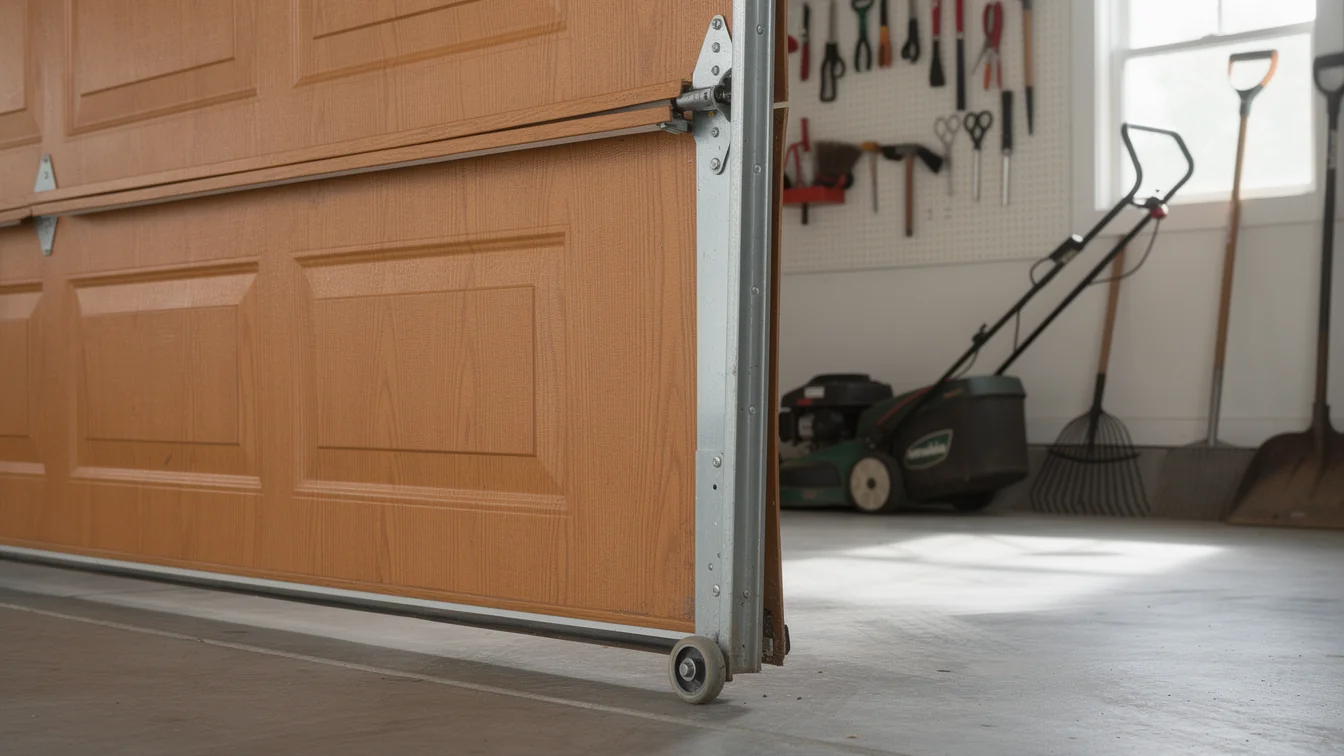
A spring that's showing stress - gaps in the coil, a visible bow, a door that won't stay up on its own - isn't going to heal itself over a mild stretch of weather. It's going to fail at the next cold snap, and when a torsion spring breaks under load, it can happen fast and loud enough to scare anyone standing nearby. The cable and drum assembly take more strain once a spring is gone, and running the opener against a dead spring is the quickest way to burn out the motor too.
Here's the honest limit: if the spring is original to a house built in that 1960s-70s window, we're not going to find an exact match sitting on a shelf. Spring sizing changed over the decades as doors got heavier with insulation, so a repair on an older door usually means fitting new hardware to the door's actual weight, not replacing like-for-like. That's not a bad thing - it's just not a five-minute fix, and anyone who tells you it is hasn't opened the garage yet.
What we find
What the Weather Here Does to It
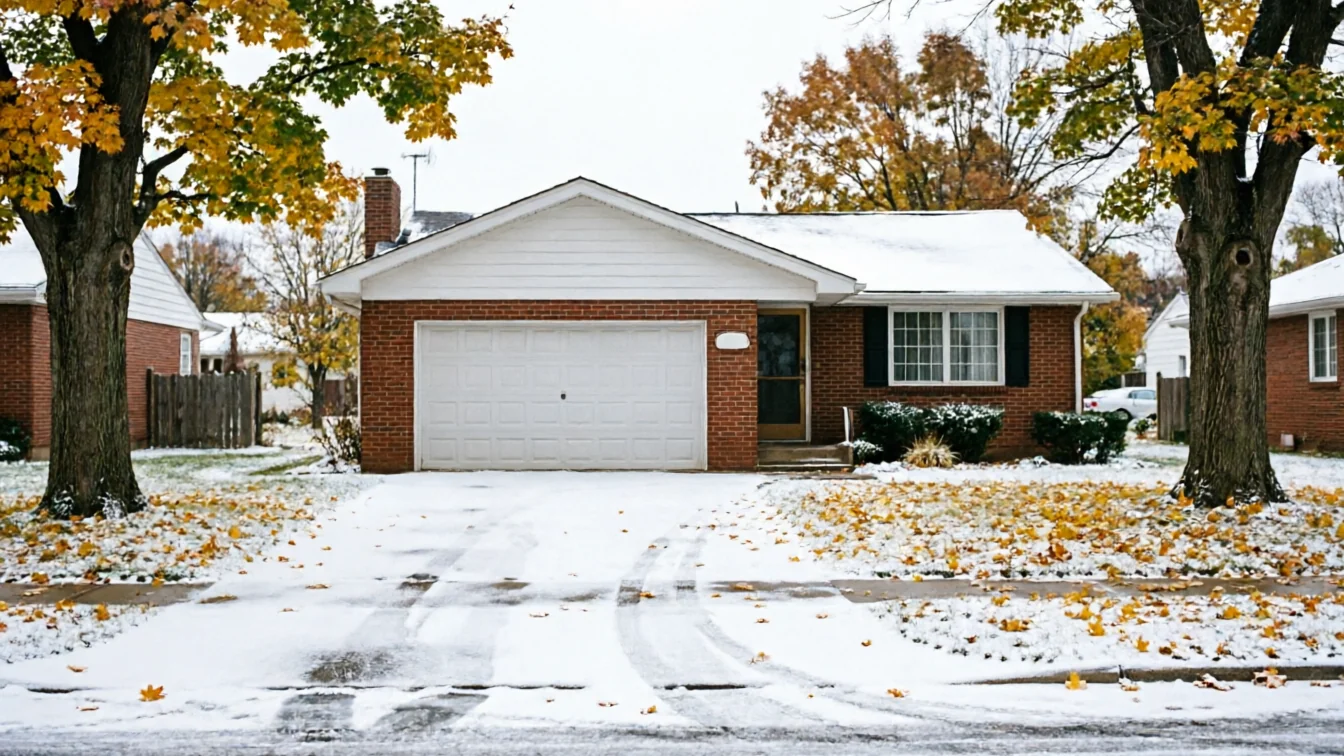
New Berlin sits in a climate band classified as cold and severe, which matters more for spring steel than people assume. Cold doesn't just make the spring stiffer for a day - repeated freeze cycles work on a spring that's already carrying micro-fractures from years of use, and each cold snap is another chance for one of those fractures to finish spreading. That's why the phone tends to ring more after a hard overnight freeze than during a heat wave.
The same front that hits New Berlin hits Hales Corners five miles out, Elm Grove six, and Greendale and Muskego both around seven - garages all built in roughly the same era, all carrying the same kind of springs, all under the same stress at the same time. If you've had the door serviced once and it's held up through a few winters already, that's a reasonable sign the hardware is in decent shape. If it hasn't been looked at since it was installed, winter is when that catches up with you.
How we work
What It Costs
A spring job depends on the spring size, the door's weight and width, and how hard the drums and cable are to get to - none of which we can price without seeing the door. What we can say is that a broken spring is rarely a one-part fix on an older door: cable and rollers that have been running against uneven tension for a while often need attention at the same visit, and skipping that just means a second call later.
Given the median household income across this area sits around $109,038, most homeowners here choose to replace the spring outright rather than patch a unit that's already shown a crack, since a second failure after a partial fix usually costs more in the long run than doing it right the first time. We won't quote a number sight unseen, and anyone who does is guessing.
Talk to a local pro
Garage door trouble in New Berlin?
Same-day service with honest, upfront quotes.