Local detail
What Is Going On
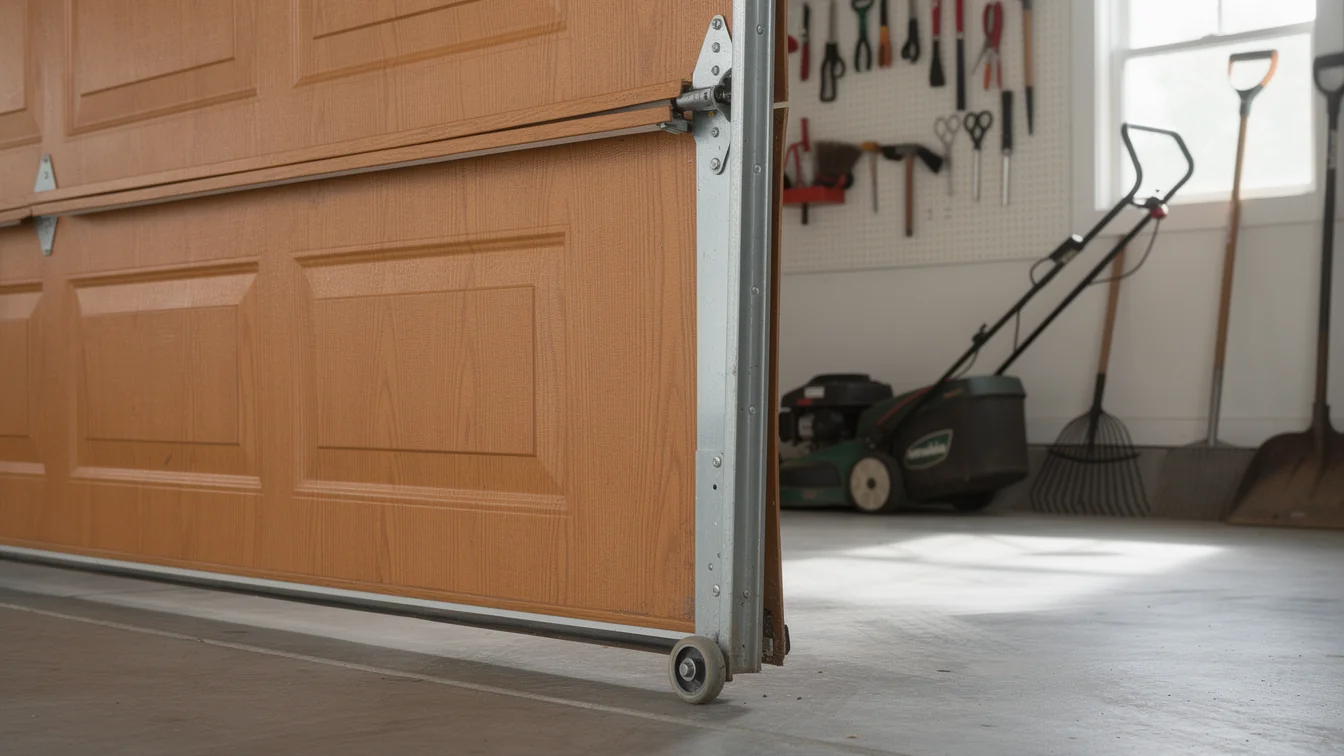
Most of the noise complaints we get in New Berlin come from houses built between 1938 and 2000, with the bulk of that stock going up in the 1960s and 70s. That matters because a lot of those doors still run on the original torsion hardware - steel that's had fifty-plus winters of expansion and contraction working on it. A grinding sound when the door starts usually means a roller has gone flat-sided or a bearing at the end of the torsion shaft is dry. A loud bang partway through the cycle is almost always a cable jumping its drum, not the spring itself, though people assume the worst. A rhythmic thump every few seconds while the door moves points to a roller hitting a dented section of track - common on these older single-car and two-car setups where the track was never upgraded to a heavier gauge. If your opener motor is straining and whining before the door even lifts, that's the opener compensating for a spring that's lost tension, and on a house from this era, that spring has likely never been replaced. None of these sounds are cosmetic. Each one points at a specific part, and the part usually tells you how long you've got before it fails outright rather than just being loud about it.
The area
Leaving It Alone
A noisy door in a New Berlin garage doesn't get quieter on its own - it gets more expensive. A roller bearing that's dry will seize, and a seized roller puts extra load on the track, which bends the track, which then needs replacing instead of just the roller. A cable that's started to fray from jumping its drum will eventually snap, and on a door from the 1960s-70s stock that's common across this area, that often happens with the door half-open, which is a heavier repair than a routine service call. The spring itself is the one we tell people not to gamble on. A torsion spring under tension that's visibly worn or making noise under load can let go suddenly, and on older setups without a safety cable run through the spring, that's a real injury risk, not just an inconvenience. We're not going to tell you every noise means an emergency. A squeak that goes away after you spray the hinges is just a hinge that was dry. But a noise that's new, that's getting worse week over week, or that's paired with the door moving unevenly is the kind of thing that turns a $30 part into a full track and cable job if you wait through a winter on it.
What we find
What the Weather Here Does to It
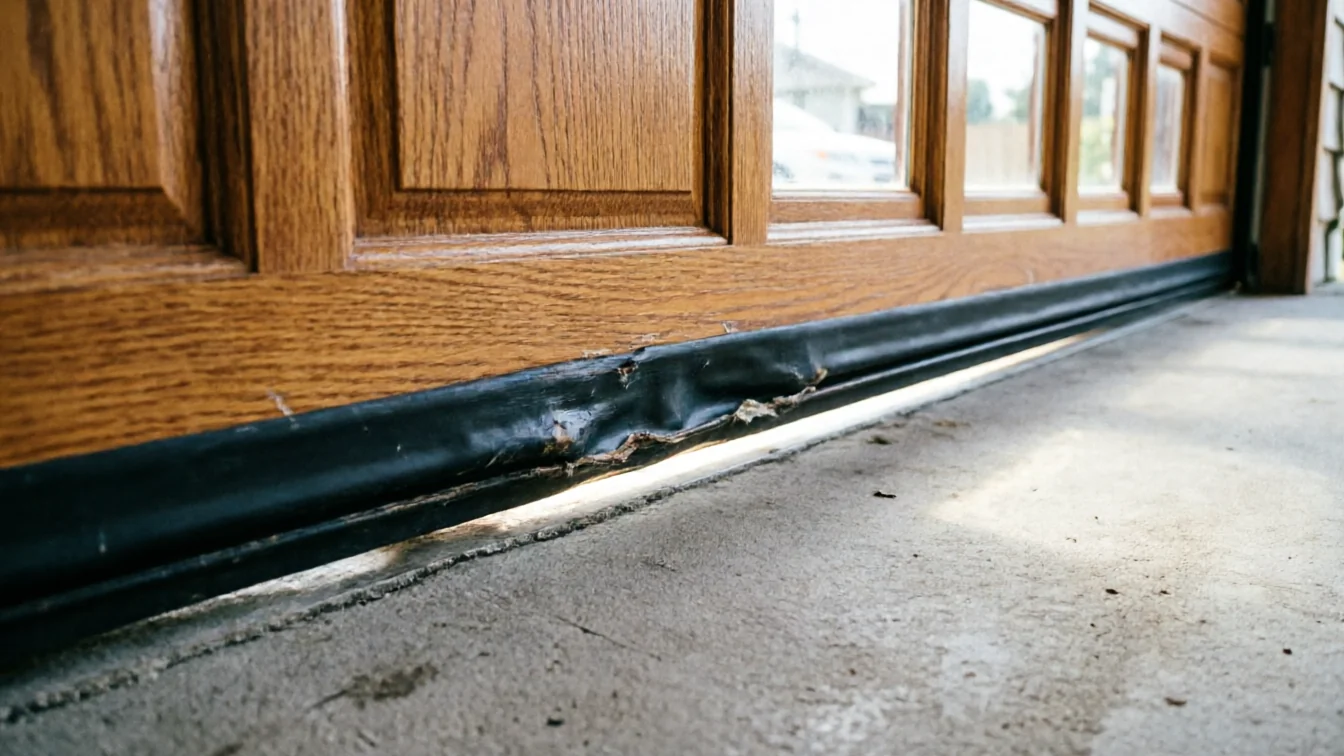
New Berlin sits in a climate band classified as severe cold, and that's not a small factor in how these doors age. Steel torsion springs lose a measurable amount of tension as temperatures drop, which is why a door that was fine in September starts groaning by December - the spring is working harder to lift the same weight. Nylon and plastic rollers, common replacements on these older systems, get brittle in sustained cold and crack rather than wear smooth, so a roller noise in January often means a roller that's actually splitting, not just squeaking. Lubricant that was fine in summer thickens in the cold and stops doing its job on the track and hinges, which is part of why so many of the grinding and squealing calls we get cluster in the coldest stretch of winter. Condensation and the freeze-thaw cycle also work on the weatherstripping at the bottom panel, and once that seal cracks, cold air gets at the bottom roller and track faster than it would on a sealed door. None of this is unique to one house - it's what severe cold climate does to any torsion-spring door, and it's why a noise that shows up with the first hard freeze is rarely coincidence.
How we work
What It Costs
We're not going to put a number on this page, because the honest answer is it depends on which part is making the noise and how long it's been doing it - a dry hinge and a cracked track are not the same bill. What we can tell you is that the median household income across our service area runs around $109,038, and most of the jobs we price reflect that: homeowners who'd rather pay for a roller or a cable now than wait for a full spring-and-track replacement later. We give a real number after we've looked at the door, not before, because a phone quote on a noise complaint is usually a guess dressed up as a price. If a job turns out to be more than it's worth fixing - a door old enough that parts are getting hard to source, for instance - we'll say so instead of patching something that'll just call us back in six months.
Talk to a local pro
Garage door trouble in New Berlin?
Same-day service with honest, upfront quotes.