Local detail
What Is Going On
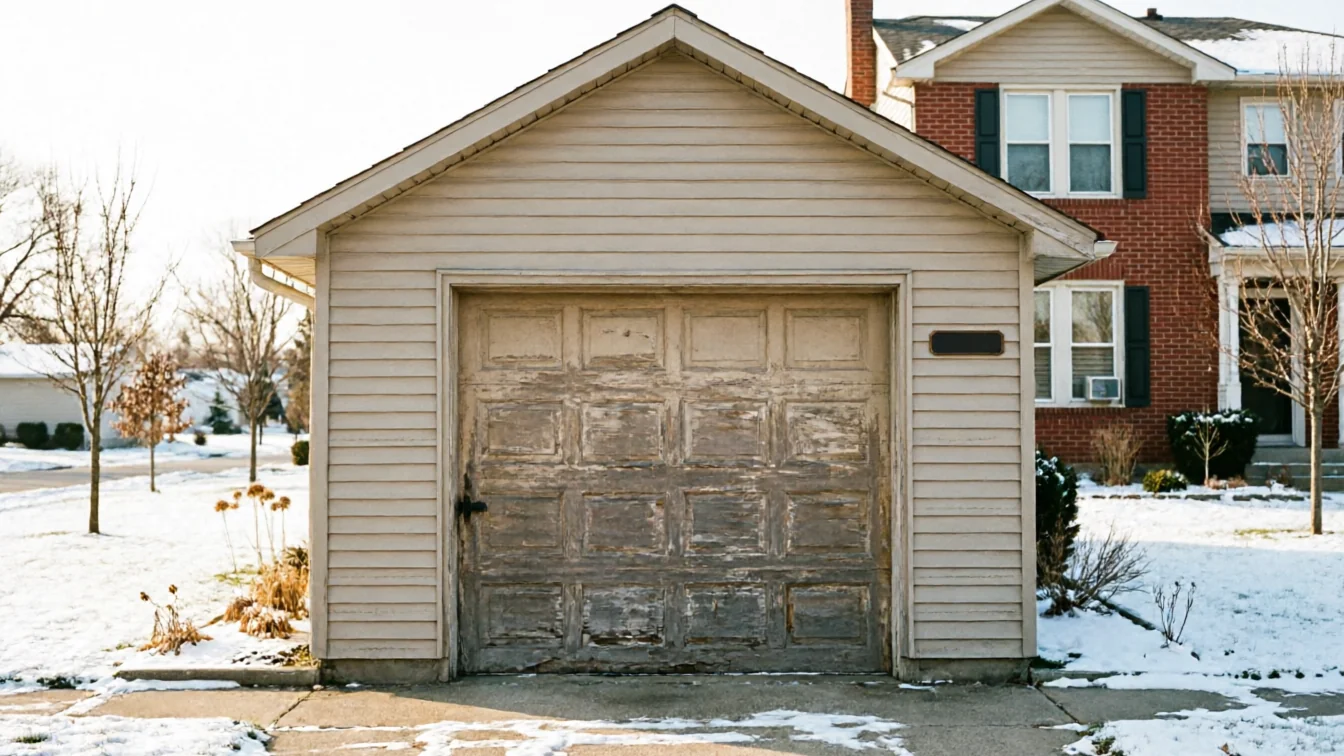
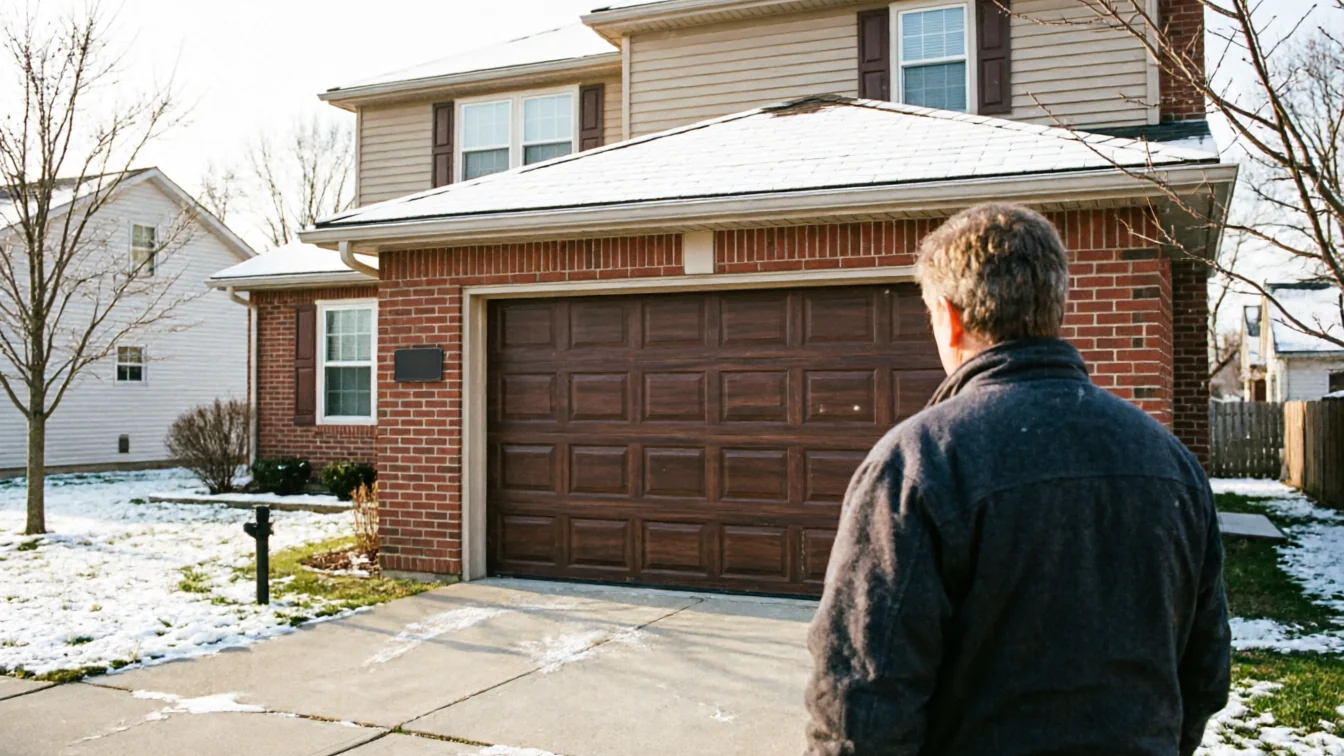
New Berlin's housing stock mostly went up between 1938 and 2000, with the bulk of it dating to the 1960s and 70s boom years. That matters more than people think when a door finally gives out. A lot of these houses were built with single-car or narrow double openings sized to garages from that era, and the original door hardware - tracks, hinges, sometimes the opener mount itself - was built to match framing that isn't standard by today's measurements. When a door fails on a house like this, you're not just swapping a panel. You're often dealing with an opening that needs the new door's jamb kit shimmed or the track realigned because nothing in the garage was built to current spec. This isn't true everywhere - it's a product of when this particular area filled in with housing. A 51-area spread of mostly same-era construction means a lot of households are going to hit this same wall around the same age of door.
The area
Leaving It Alone
If the door still opens and closes square, and the springs aren't visibly stretched or rusted through, you don't need to replace it just because it's old. A door from a 1960s or 70s build can keep running for years past when people start worrying about it, especially if the panels haven't warped and the opener isn't straining. Where this stops being true is when the door is original to a house built in that median 1978 window and has never had the torsion spring swapped - at that point you're not maintaining it, you're waiting on it. We'll tell you straight if a repair buys you real time versus a replacement that was coming either way. Pushing a patch job on hardware that's outlived its design life just moves the failure to a worse moment, usually a cold one.
What we find
What the Weather Here Does to It
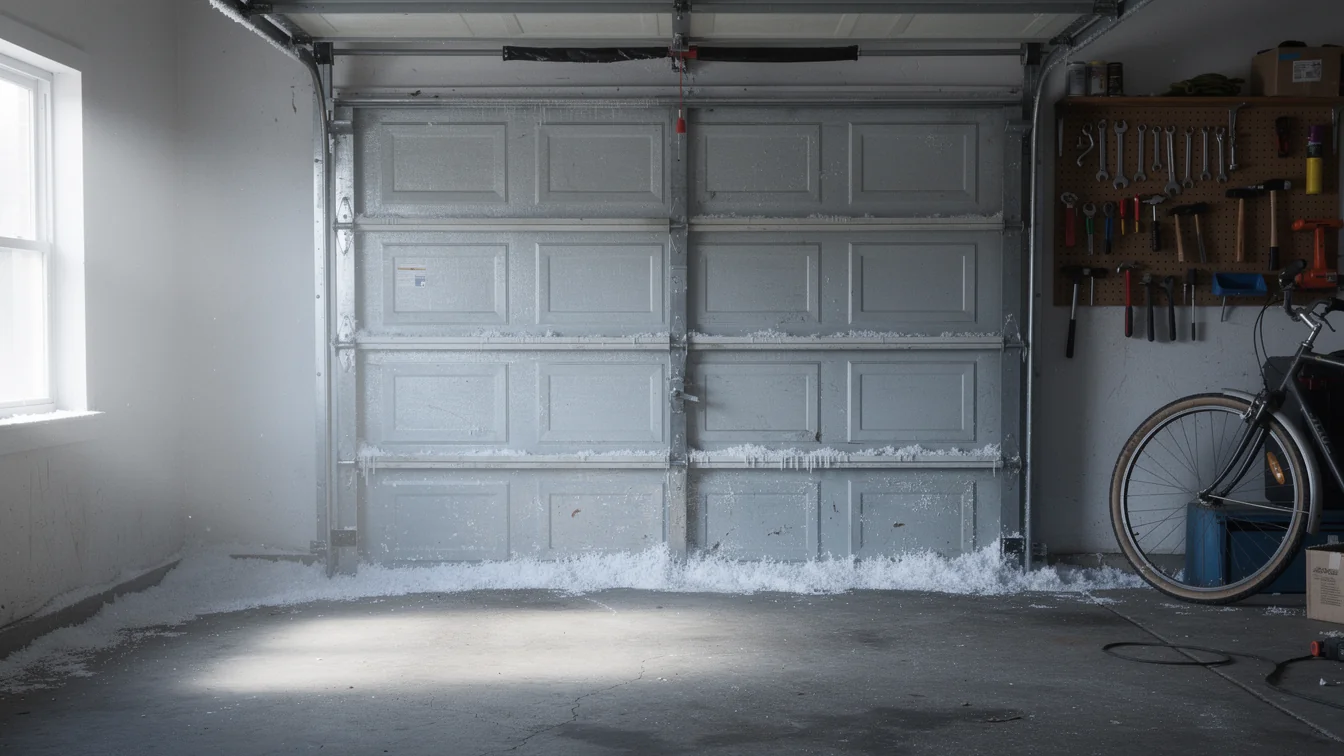
This area sits in a severe cold climate band, and that changes what a door has to survive, not just how it looks. Steel contracts in deep cold, and on an older door with worn rollers or a stretched cable, that contraction is often what turns a marginal part into a dead one overnight. Insulation matters more here than in a milder climate - a non-insulated door on an attached garage in a severe cold zone means the wall it shares with the house is doing double duty fighting outside temperature. If you're replacing a door that's original to a 1960s-70s build, it almost certainly isn't insulated to any standard that makes sense for this climate now. That's one of the real reasons to replace rather than keep patching: a new door with a proper insulated core handles the cold-season stress on springs and seals in a way an old uninsulated slab never will.
How we work
What It Costs
We don't have a flat number to hand you here because the right door depends on the opening, the insulation level you want for this climate, and whether the track or opener needs work alongside the panel - all of which varies house to house even within a single-era neighborhood. What we can tell you is that the math on replacement changes with household budget reality: median household income across the service area sits at $109,038, and most buyers in that range are weighing an insulated steel door against repeated spring and cable repairs on original hardware. If your garage door is original to a house from the area's median 1978 build year, you're generally past the point where repair cost competes with replacement cost. We'll walk the actual opening and give you a number for your door, not a quote pulled from a price list that assumes a house nothing like yours.
Talk to a local pro
Garage door trouble in New Berlin?
Same-day service with honest, upfront quotes.