Local detail
What Is Going On
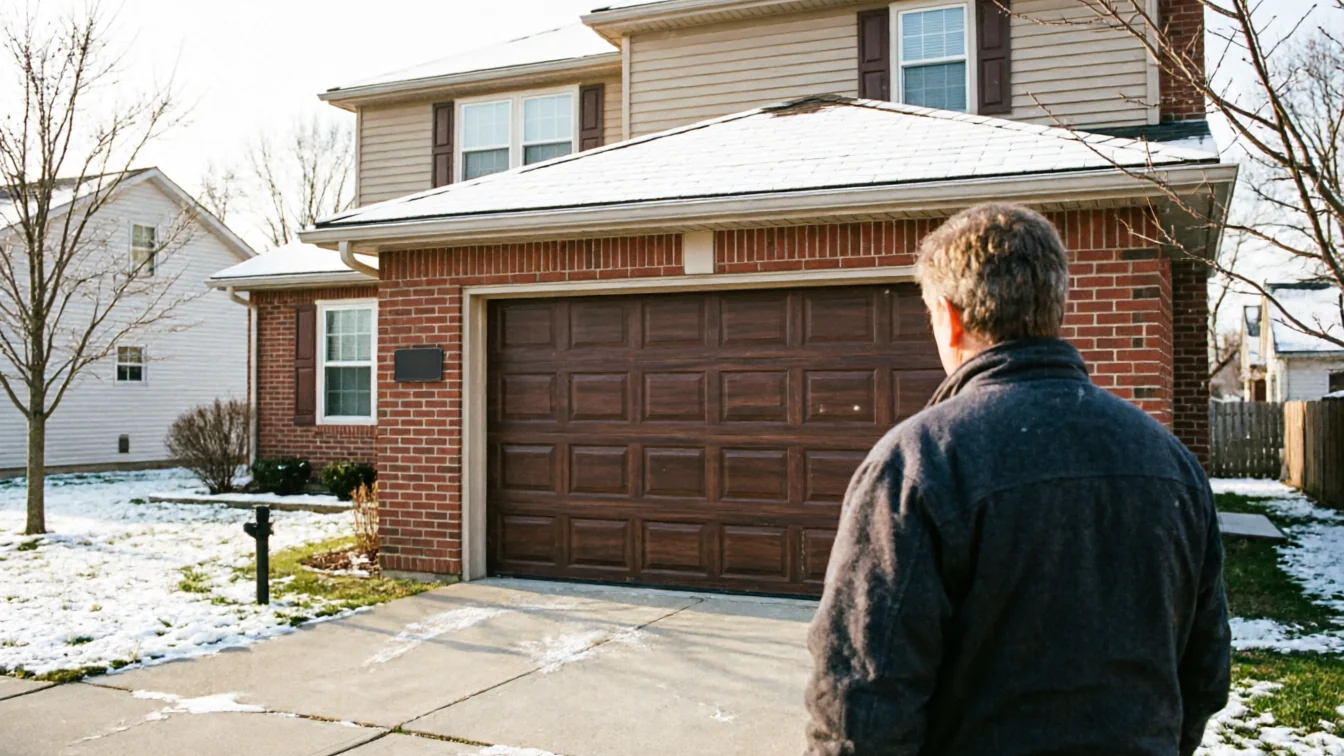
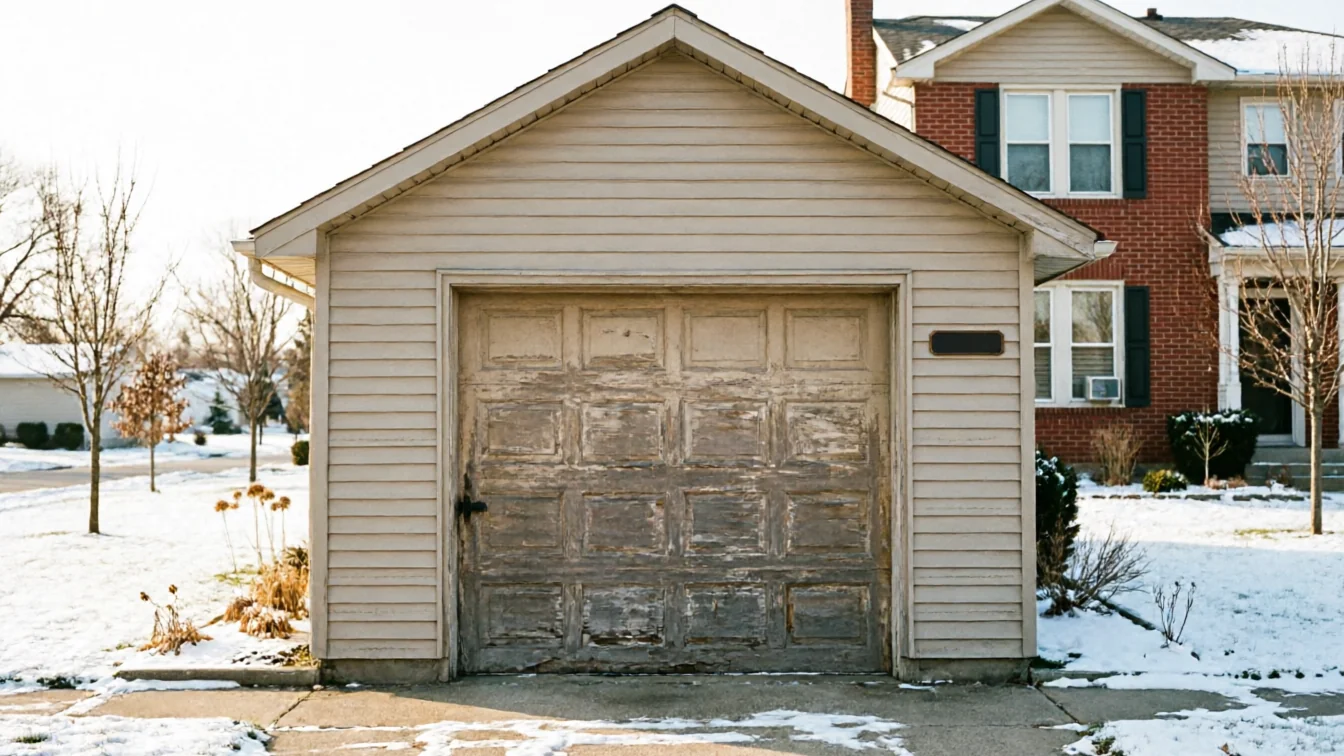
New Berlin's housing stock runs from 1938 to 2000, with the median home built around 1978, and the bulk of it went up in the 1960s and 70s across the area's named neighborhoods. That matters more for garage doors than almost any other part of the house. Insulation requirements for garage doors didn't exist when most of these doors were specified, so builders put in whatever was cheapest: single-layer steel or wood panel doors with no foam core, no thermal break at the track, and no weatherstrip worth mentioning. If your door still has its original skin, you're looking at a panel with an R-value close to zero. The door itself isn't broken in the sense of not opening. It just was never built to do the job a modern code-rated door does. Original hardware on a door this old is also a different animal - steel gauge, spring sizing, and track spacing were all specified to older standards, which is one reason parts from a newer door rarely bolt straight onto an old frame without adjustment. None of this means the door needs to come out tomorrow. It means you're working with equipment designed for a different set of expectations than the ones we build to now.
If your garage shares a wall with living space, which is common in homes from this era, that thin original door is sitting right against the part of the house you're paying to heat.
The area
Leaving It Alone
You can leave an uninsulated original door alone and it will keep opening and closing for a long time - steel doesn't degrade fast, and a lot of 1960s and 70s doors are still in service around New Berlin right now. The spring and opener are what tend to fail first, not the panel itself, and those are separate repairs from the insulation question. So leaving the door as-is isn't a safety problem by default. The cost of leaving it alone shows up elsewhere: in the heat loss through an uninsulated panel in a climate that gets genuinely cold, and in the gap at the bottom and sides where original weatherstrip has hardened and shrunk over fifty-plus years. That gap lets in more cold air than most people guess, especially on an attached garage. We'll say plainly that replacing a door purely for insulation value is a judgment call tied to your heating costs and how long you plan to stay in the house - it's not an emergency repair, and we're not going to tell you it is. If the door still runs smooth and the panel isn't rusted through or delaminating, there's a real argument for waiting and spending that money on the parts that actually fail: springs, rollers, the opener itself.
What we find
What the Weather Here Does to It
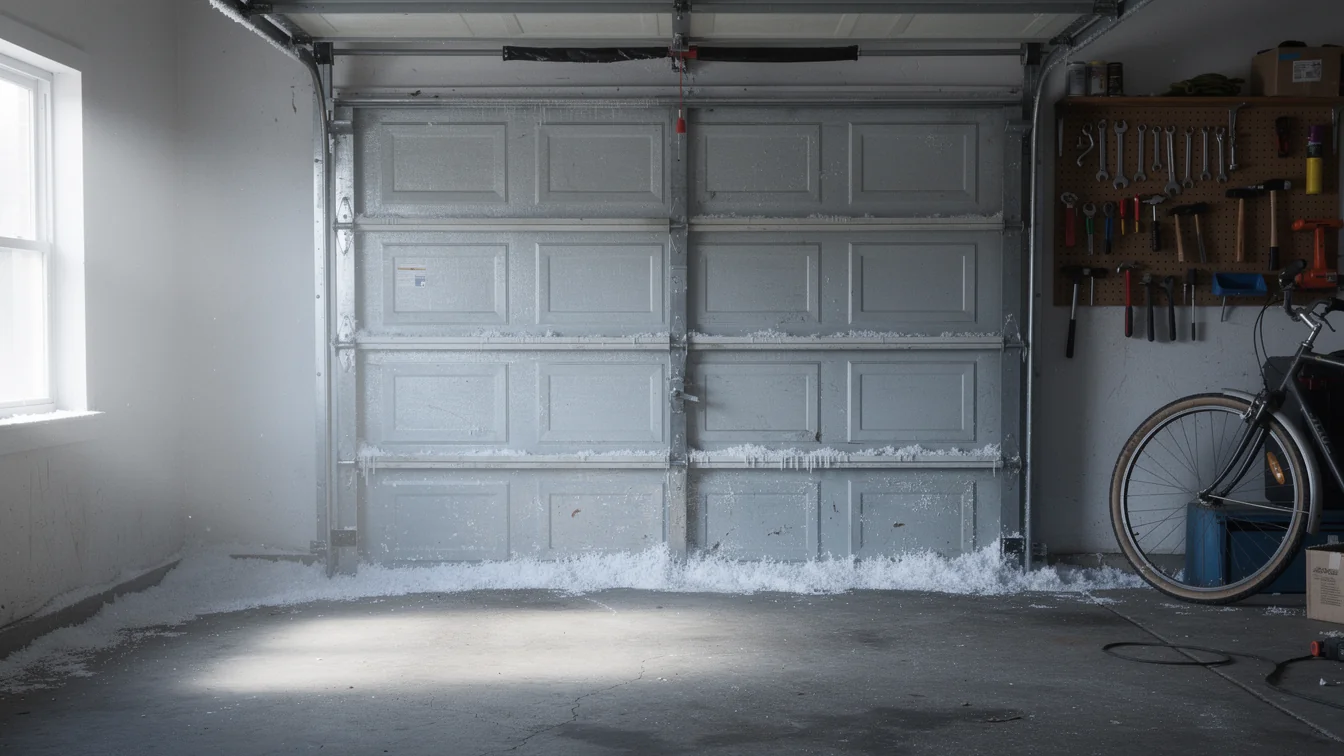
New Berlin sits in a cold-severe climate band, and that's the part original garage doors from this era were never designed around. Steel contracts in cold and that original, unreinforced panel can bow or rack slightly over a hard winter, which throws off the seal at the sides even if it looked fine when it was warm out. Condensation is the other issue: an uninsulated steel door is the coldest surface in the garage, so moisture from a wet car or a January thaw lands on it and sits there, which is how surface rust starts on panels that are otherwise structurally sound. None of this is dramatic or sudden. It's slow wear that adds up over decades of the same cold cycling the door wasn't built to handle. On an attached garage, that cold steel panel is also acting as one whole wall of your heating envelope, and in a service area where the housing median sits around 1978, that's the normal condition, not the exception. We see it on doors across the older stock out here more than on anything built after insulation requirements became standard.
How we work
What It Costs
We don't have a price list to hand you here, and giving you a number without seeing the door would be a guess dressed up as a quote. What we can tell you is what drives the cost on a job like this: whether you're replacing just the panel versus the full door and track assembly, whether the opener is original and needs to come out too, and whether the frame has shifted enough over the decades that it needs squaring up before a new door goes in. On a house from the 1960s or 70s stock common around New Berlin, that frame work comes up more often than it would on newer construction, because the opening itself has had fifty years to settle. We'll look at the actual door and give you a real number before anything gets ordered - not an estimate based on the age of the house alone.
Talk to a local pro
Garage door trouble in New Berlin?
Same-day service with honest, upfront quotes.