Local detail
What Is Going On
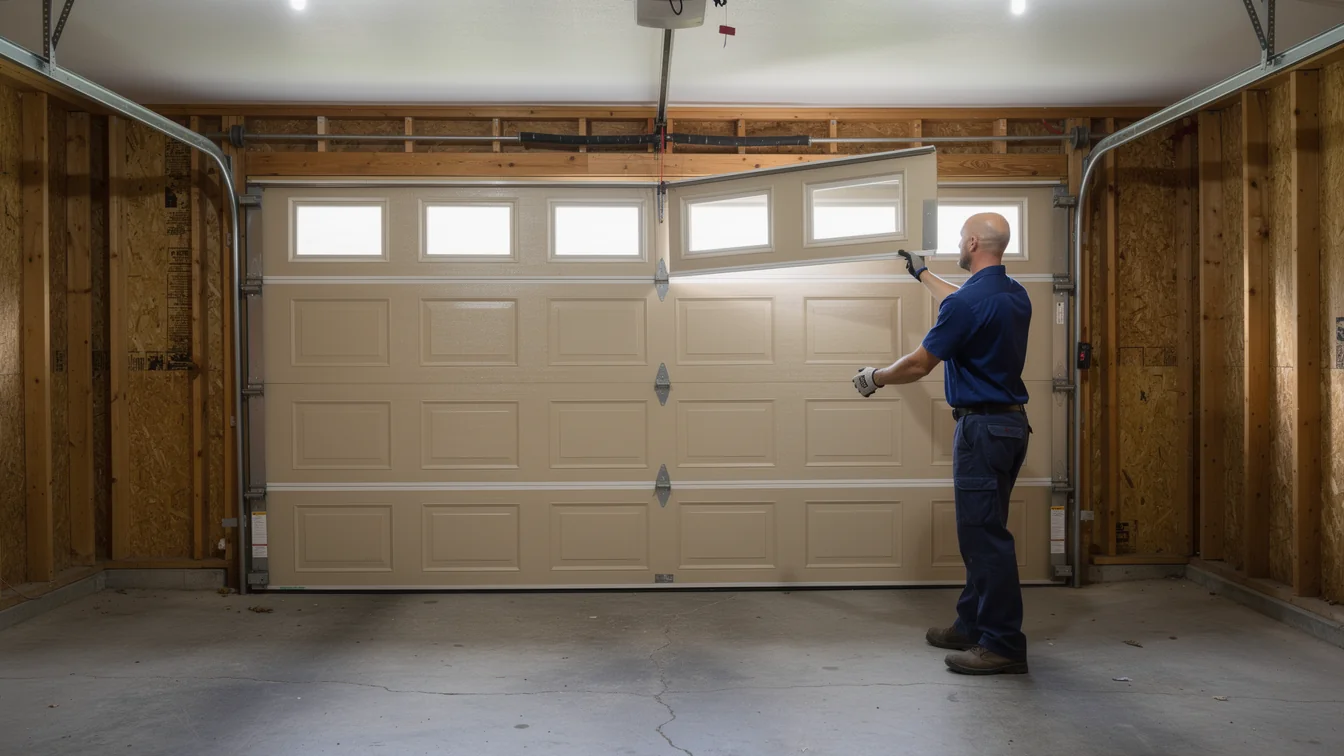
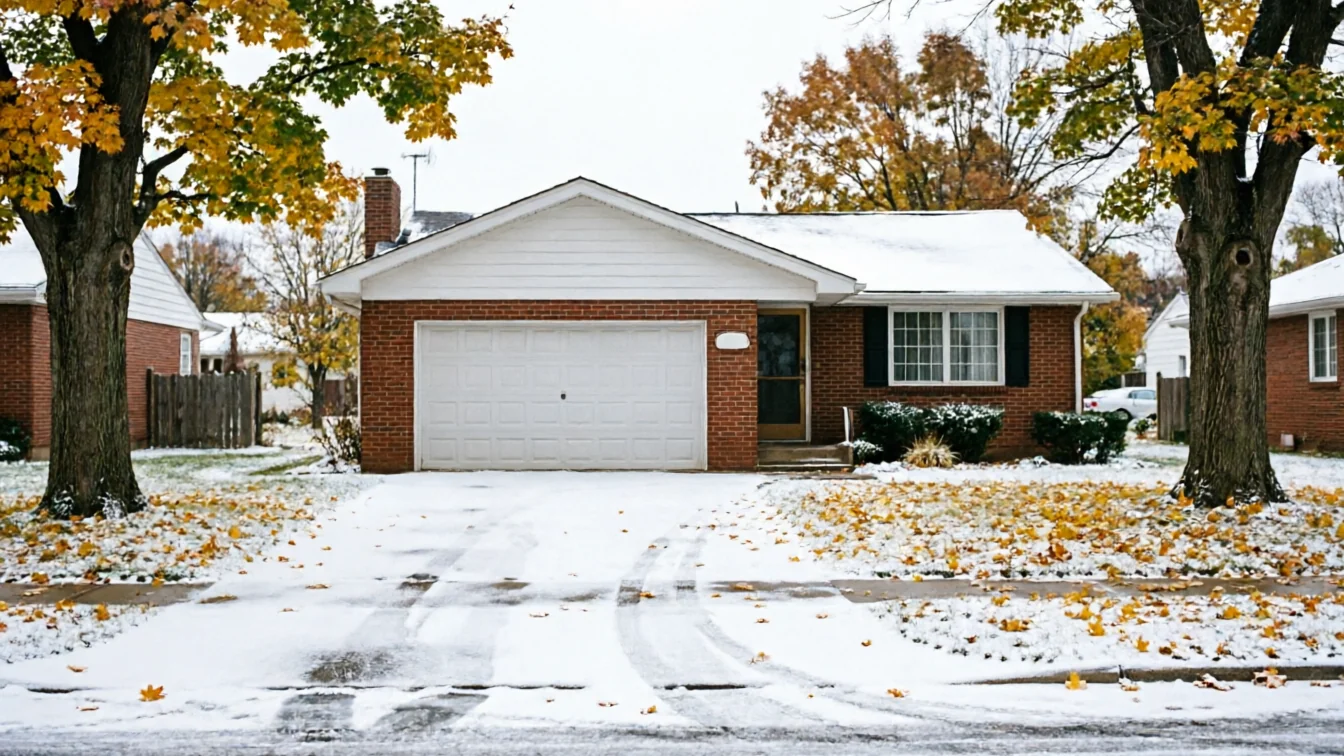
Most of New Berlin's garage doors sit on houses built between 1938 and 2000, with the bulk of the stock dating to the 1960s and 1970s across the city's 51 named subdivisions. That matters more than people expect, because a service call on a house that age isn't a generic once-over. We're checking whether the spring is original or a later swap, whether the track was ever re-set square after decades of settling, and whether the opener - if it's been upgraded at all - was bolted onto hardware never designed to carry it. A door installed on a house built in the 1960s or 70s almost never has the safety sensors required on anything sold today, so a service call here often starts with that gap, not the noise you called about. We look at the cable drums, the hinges between panels, and the bottom bracket, because on hardware this old, the failure is rarely just the one part you noticed. It's usually the part next to it, already most of the way gone.
The area
Leaving It Alone
A door that's sticking or dropping unevenly on a house in that 1938-2000 build window usually isn't going to fix itself, and it rarely stays a small problem. Torsion springs lose tension in stages - first the door gets heavy to lift by hand, then the opener starts straining, then the cable or the spring itself lets go, often under load. On older hardware that's already carried forty or fifty years of cycles, that last stage comes faster than on a newer door. The honest limitation here: we can't always tell you from a description over the phone whether you've got a week or a day before something fails, because it depends on exactly how worn the specific spring is, and that's a hands-on call. What we can say is that a door that's groaning or jumping on the track on a house this age is past the point where waiting saves you money. The part that breaks under tension can bend a track or crack a panel on its way down, turning a parts repair into a bigger job.
What we find
What the Weather Here Does to It
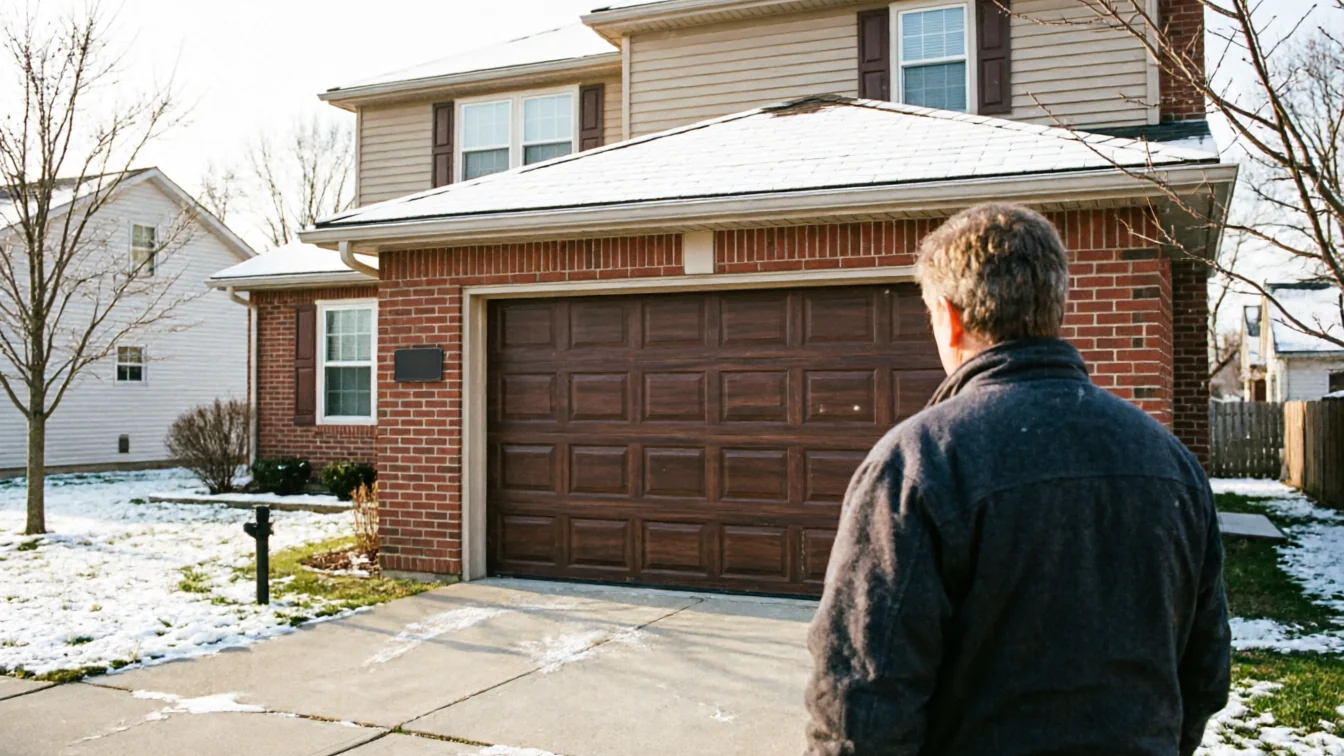
New Berlin sits in a severe cold climate band, and that changes what we're actually looking for on a service call versus what a tech in a milder region checks. Cold doesn't just make a door feel stiff - it makes the steel in an older torsion spring brittle at the exact point where metal fatigue has already been building for decades. A spring that's cycled through this many hard winters is carrying stress you won't see until it snaps, usually on the coldest morning of the year when you need the door most. Cold also shrinks grease in the rollers and track, which is why an older door that worked fine in October starts grinding or hesitating once temperatures drop. On a house in that 1938-2000 build era, the slab underneath has usually gone through its own freeze-thaw movement over the years, which can throw the track out of plumb by a fraction of an inch - enough to bind a door that's otherwise sound. A service call in this climate checks the spring tension, the track alignment, and the lubrication together, because in weather this harsh they fail as a set.
How we work
What It Costs
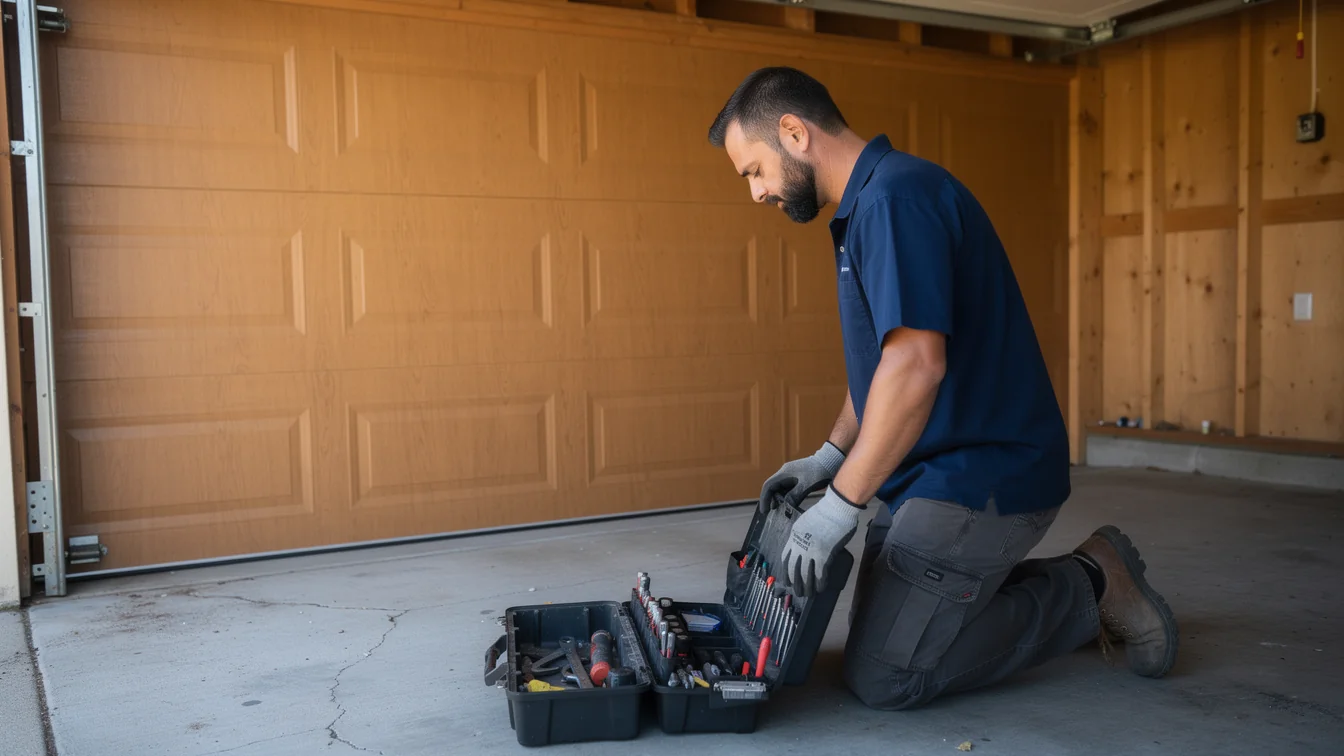
We're not going to put a number here that isn't real. What drives the cost on a given call is almost always the age and originality of the hardware - a house built in the 1960s or 70s with its original spring and track is a different job than one where a previous owner already swapped in newer parts. If your house falls into that 1938-2000 build window that covers most of New Berlin, the original hardware was sized for a lighter door than what's probably hanging there now after a replacement, and matching that mismatch correctly takes more than a quick part swap. We'll tell you on site, after we've actually looked at the spring size, the track condition, and whether the opener is original, what the repair involves and what it runs. We won't quote a repair over the phone sight unseen, because on hardware this old, guessing wrong either way isn't fair to you.
Talk to a local pro
Garage door trouble in New Berlin?
Same-day service with honest, upfront quotes.