Local detail
What Is Going On
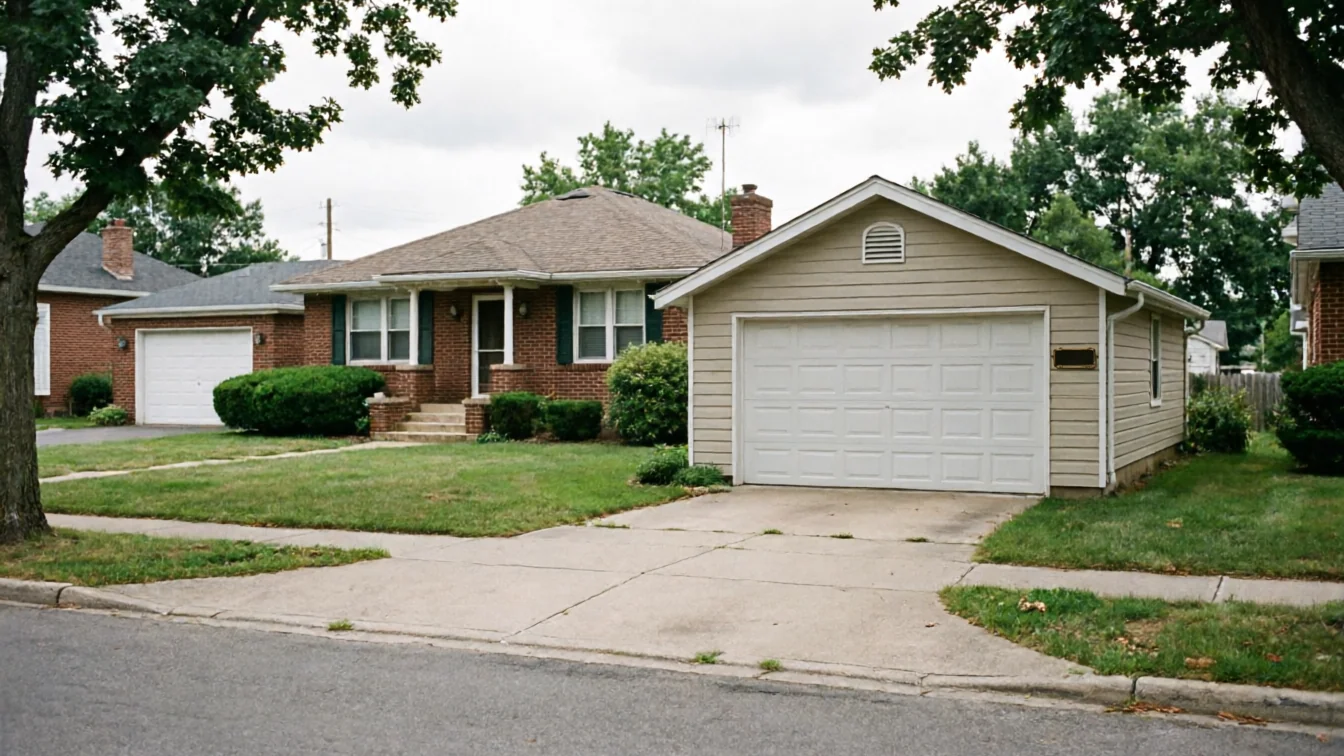
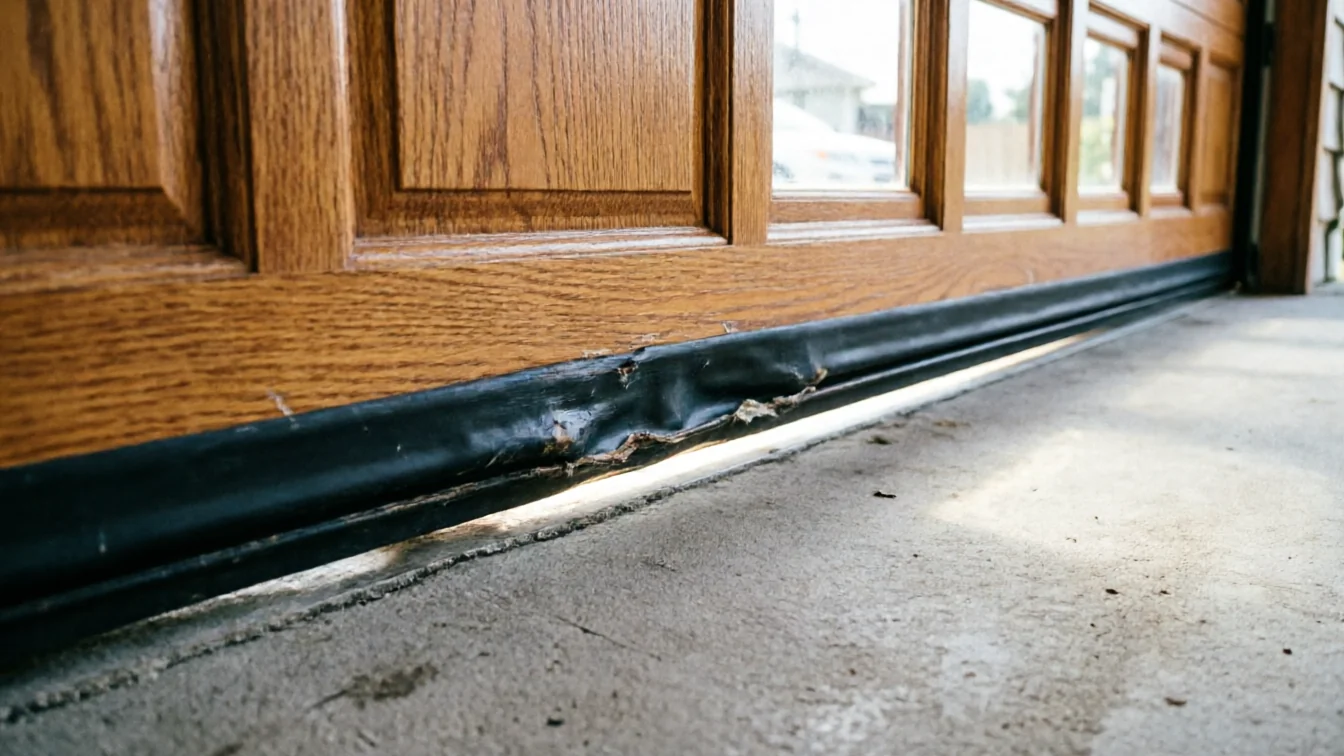
Most of the garage doors we look at in New Berlin sit on houses built somewhere between 1938 and 2000, with the bulk of the stock dating to the 1960s and 70s. That matters for seals because the bottom astragal and the side weatherstrip on a door that age were never designed to last fifty years. The rubber hardens, cracks at the corners, and pulls away from the track where the slab meets the slab track guide. You'll see daylight at the bottom corners first, usually the side the wind hits. On a lot of these original frames the stop molding has shifted too, so even a new bottom seal won't close the gap unless the wood behind it gets reset. We also see this on doors that have had one or two spring jobs done over the years but never had the perimeter seal touched, because nobody thinks about the rubber until the floor of the garage is wet. If your door is from that same era, the seal problem usually isn't the seal by itself - it's the frame it's sitting against.
The area
Leaving It Alone
A torn bottom seal on its own won't strand your car. What it does is let cold air and meltwater sit against the slab, and on a 1960s or 70s frame that moisture finds the same wood that's already fifty-plus years old. We've opened up jambs where the bottom two feet had gone soft from years of a seal that quit holding water out. Once that happens you're not buying a weatherstrip kit anymore, you're rebuilding the jamb before the new seal has anything solid to press against. The other thing that goes unnoticed is the opener. A door that doesn't seat flush because the track or stop has shifted makes the opener work harder on every cycle, and that shortens the life of the gears inside it. None of this happens overnight. It's a slow failure that shows up as a bigger bill than the seal itself would have cost to fix two winters earlier.
What we find
What the Weather Here Does to It
New Berlin sits in a climate zone we'd call cold and severe, and that's the whole reason seals matter here more than they would somewhere mild. The swing from a January morning below zero to a 40-degree afternoon moves the wood jamb and the steel door skin at different rates, and a seal that's already brittle can't flex with that. Ice is the other piece. Meltwater that gets past a bad bottom seal refreezes overnight against the slab, and that's what locks a door to the floor on the coldest mornings - not the spring, not the opener, just ice holding the bottom seal to the concrete. We get calls every winter from people who think the opener died when really the door is frozen to a seal that's been letting water through all season. Fixing the seal before the hard freeze sets in is cheaper than any call we make after it.
How we work
What It Costs
We don't have a flat number to put here, because what a seal job runs depends on whether it's just the bottom astragal, the full perimeter kit, or a jamb that needs wood repair behind it first - and that last part is common enough on 1960s and 70s frames that we won't quote a price over the phone without seeing it. What we can tell you is which end of that range you're likely in: a straight bottom seal swap on a door that's otherwise square is the smallest job we do. Rot behind the stop molding, which we find more often on the original frames than on anything built after the 90s, turns it into carpentry first and weatherstripping second. If your door is sealing fine and you just want the winter-ready check, that's a short visit. If water's already gotten into the jamb, ask us to look at the wood before we talk seal brand.
Talk to a local pro
Garage door trouble in New Berlin?
Same-day service with honest, upfront quotes.