Local detail
What Is Going On
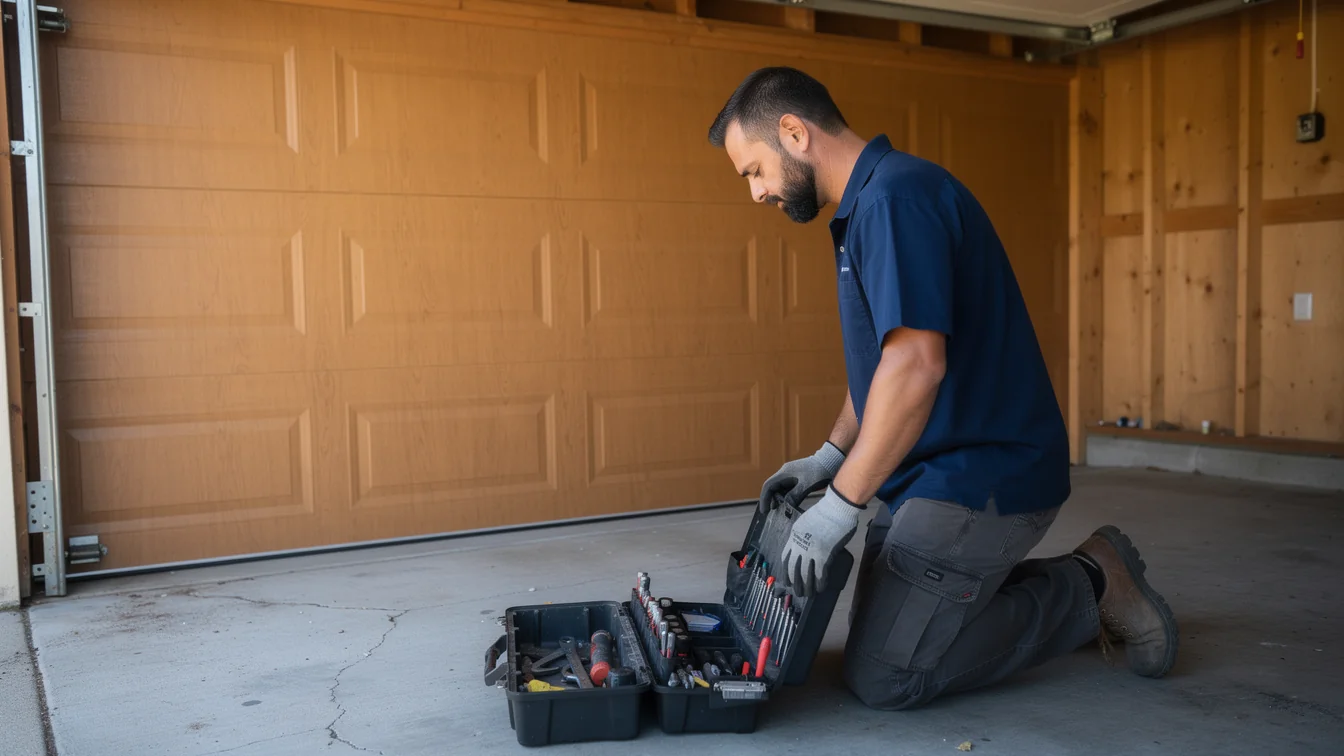
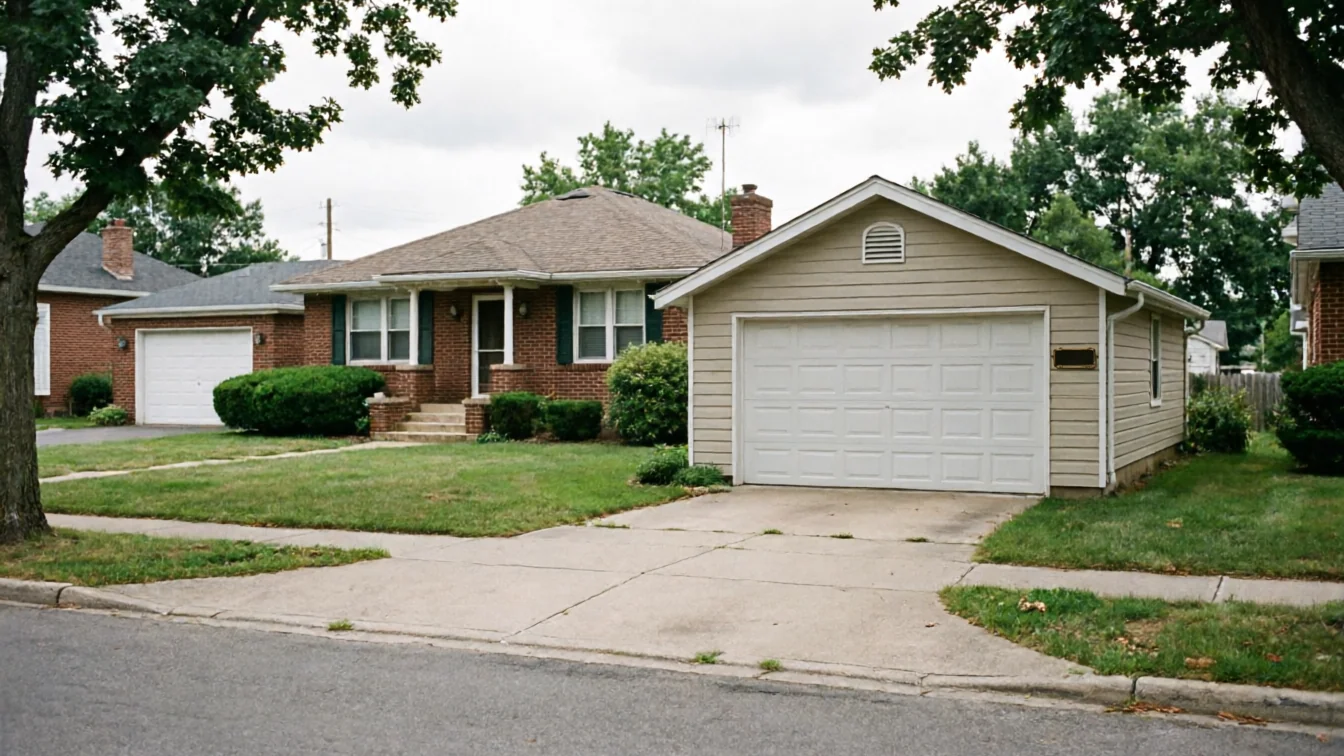
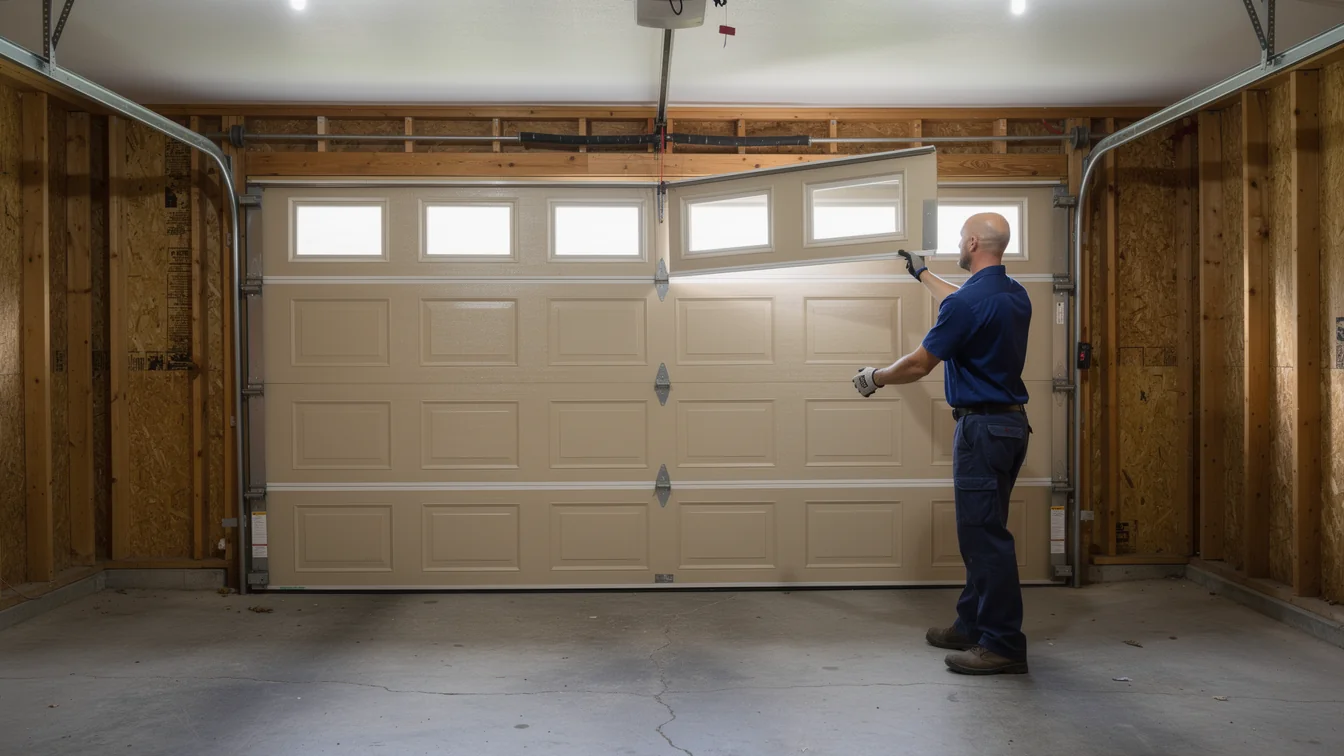
Most of the houses a tech walks up to in New Berlin were built somewhere between 1938 and 2000, with the bulk of that stock going up in the 1960s and 70s. That matters before a single tool comes out of the truck, because a door and opener installed in a 1965 build and one installed in a 1995 build fail in different ways. The first thing a tech does is look at the door itself - panel material, hinge spacing, whether the track is still the original roll-formed steel or a later replacement. Then the springs: torsion or extension, and how worn the winding cones look. A lot of homes from that era still run the hardware that came with the house, which means the spring has had decades to fatigue even if nobody's touched it. After that comes the opener - chain drive units from the 70s and 80s are common here, and a tech checks whether the unit is original or a retrofit before deciding if the complaint is really about the opener or about the door it's lifting. None of this is guesswork; it's pattern recognition built on knowing what's actually on the other side of the door in this town.
The area
Leaving It Alone
Not every noise or stiff spot needs a same-day call. A door that's a little heavier to lift by hand in January than in July is doing what a door on old rollers in a cold climate does - that's wear, not failure. A tech will tell you straight when a repair isn't worth doing yet: if the springs are original to a house from the 60s or 70s and haven't broken, replacing them early just because of their age isn't always the right call, especially if the rest of the hardware is sound. The honest limitation here is that we can't predict exactly when a 50-year-old spring will go, only that the odds go up every winter it's stayed in service. What we won't do is talk a homeowner into panel or track work that doesn't match what the door is actually telling us. If the symptom is cosmetic - a dented bottom panel, a squeak that WD-40 handles - it gets flagged as optional, not urgent.
What we find
What the Weather Here Does to It
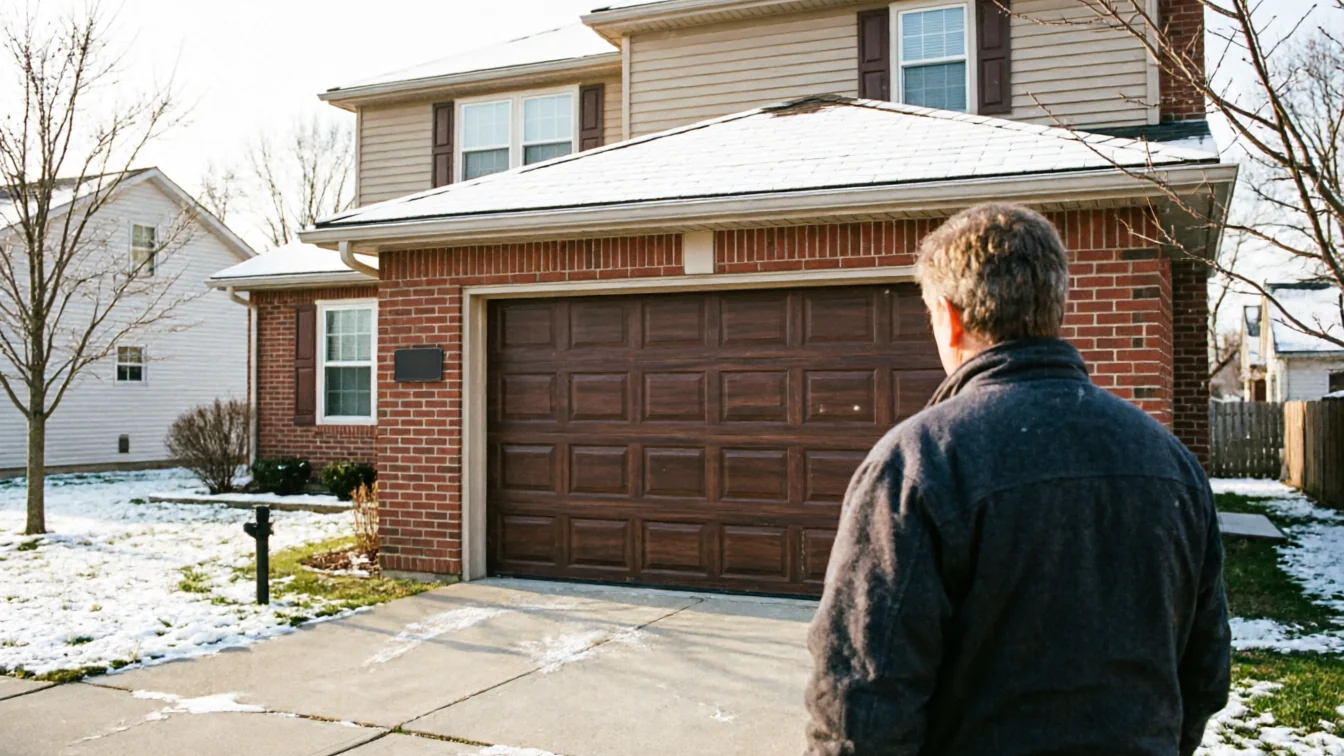
New Berlin sits in a cold-climate band with severe winter conditions, and that shows up in the hardware before it shows up anywhere else. Steel contracts in deep cold, which tightens tolerances on tracks and rollers that were already set decades ago for a house built in the 60s or 70s. A tech checks roller wear and track alignment specifically because cold snaps are when a slightly bent track stops forgiving small misalignments and starts binding. Torsion springs lose a measurable amount of lifting force as temperatures drop, so a spring that's borderline worn in September can snap in January under the exact same load it handled fine all summer. Weatherstripping on original doors from this era is often original too, and it hardens and cracks faster here than it would in a milder band, letting cold air and moisture into the garage, which then affects anything metal stored in it. None of this is theoretical - it's the reason a cold-weather service call so often turns up a spring issue that a summer call for the same door would have missed.
How we work
What It Costs
We don't post a flat number here because what a repair costs depends on what's actually on your door - and in a service area with houses spanning 1938 to 2000, that varies a lot. A torsion spring job on an original 1970s double door is a different scope than opener work on a retrofit unit from the 90s. What we can tell you is that a tech prices the job after checking spring type, opener age, and track condition, not before. Given the median household income across this service area runs well above the national figure, we hear plenty of requests for full opener upgrades rather than patch repairs, but that's a homeowner's call to make once the diagnosis is in hand, not something we push. If a repair would cost close to what a new door costs, we say so.
Talk to a local pro
Garage door trouble in New Berlin?
Same-day service with honest, upfront quotes.