Local detail
What Is Going On
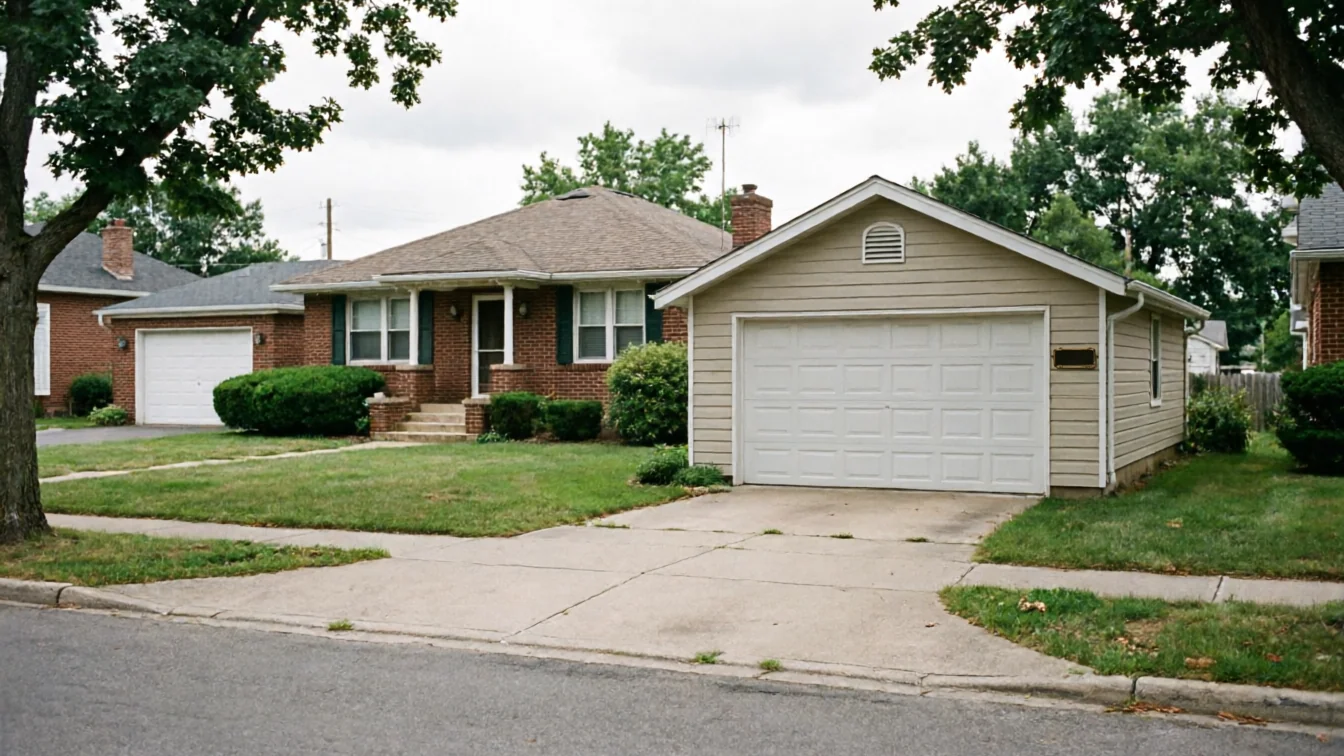
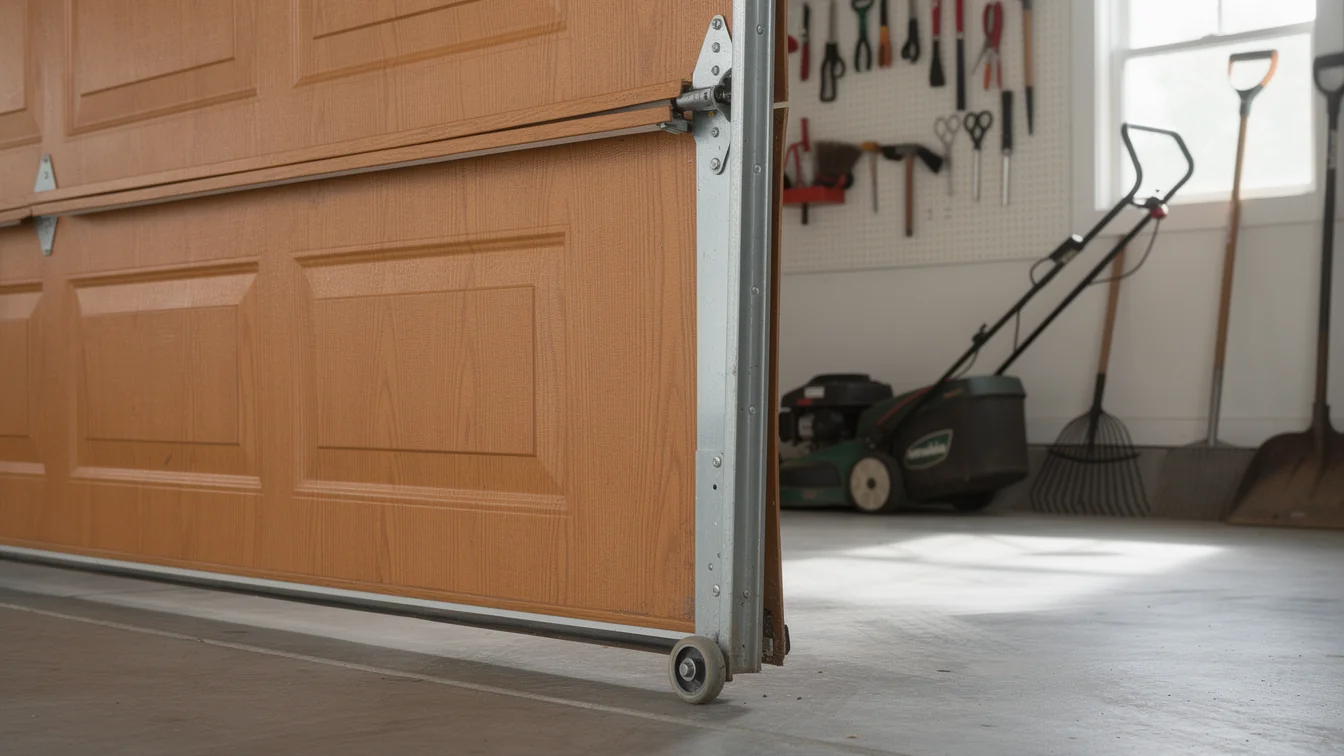
A door off track almost never happens on its own. One roller catches wrong, a bracket bolt that's been working loose for a year finally lets go, and the panel climbs out of the channel instead of running through it. In New Berlin, a lot of what we see traces back to the house itself. Housing here was built mostly between 1938 and 2000, with the median landing around 1978, which means a huge share of the doors on this side of town are riding on track hardware sized for a door style nobody manufactures the same way anymore. Most of the stock across the named sections of New Berlin dates to the 1960s and 70s, and that generation of door came with lighter-gauge track that bends under less force than what goes into a new install. Once that track takes even a slight bow, from age, from a bump, from a bracket pulling away from aging framing, the rollers don't track true anymore and the door starts riding up on one side before it comes off altogether. It's a hardware problem more than a door problem, and the hardware in question is older than most of the people calling us.
The area
Leaving It Alone
A door that's slipped partway off track will usually still open and close a few more times before it fully derails, and that's the dangerous window. Each cycle grinds the roller against the edge of the track instead of inside it, which chews up both the roller and the track lip. Keep running it and you're looking at a bent track section instead of a simple adjustment, plus a door that can drop unevenly and put a torsion spring under a load it wasn't set for. We'll say plainly: if a door is visibly crooked in the opening or one corner hangs lower than the other, stop using the opener and work it by hand, or don't move it at all. We don't recommend DIY realignment on anything older than a basic roller swap - springs and cables under tension are not a weekend fix, and we won't pretend otherwise.
What we find
What the Weather Here Does to It
New Berlin sits in a cold-severe climate band, and that matters more to a garage door than most owners expect. The freeze-thaw cycle that runs through an unheated or lightly heated garage all winter works at every bolted connection on the track - bracket screws, lag bolts into the jamb, the hinges between panels. Metal contracts in the cold, expands when the garage warms up on a sunny afternoon, and over years that constant flex backs fasteners out a fraction of a turn at a time. On the 1960s-70s stock that makes up most of this area, those connections were never over-built to begin with, so they're the first thing to give. Ice buildup at the bottom panel is the other culprit - a door that's frozen slightly to the slab gets forced by the opener, something gives at the weakest point, and often that's the track bracket rather than the seal. Cold doesn't cause a door to jump track by itself, but it's the thing that finishes a problem that's been building for years.
How we work
What It Costs
We're not going to put a number here that doesn't hold up once we're standing in your garage, because the range is wide - a bent roller bracket is a different job than a track section that's been pulled away from the framing. What we can tell you is what drives the cost on a house like most in New Berlin: age of the track hardware (the 1960s-70s gauge track isn't something every supplier stocks off the shelf, so a full track replacement can mean a short wait on parts), whether the spring took on extra load from the door running crooked, and how much of the bracket hardware has corroded from decades of freeze-thaw cycling. A straightforward roller and track realignment is a much smaller job than replacing bent track and resetting spring tension. We'll give you the real number after we look at it, not before.
Talk to a local pro
Garage door trouble in New Berlin?
Same-day service with honest, upfront quotes.